
Panah Press | Sunday, October 18, 2026
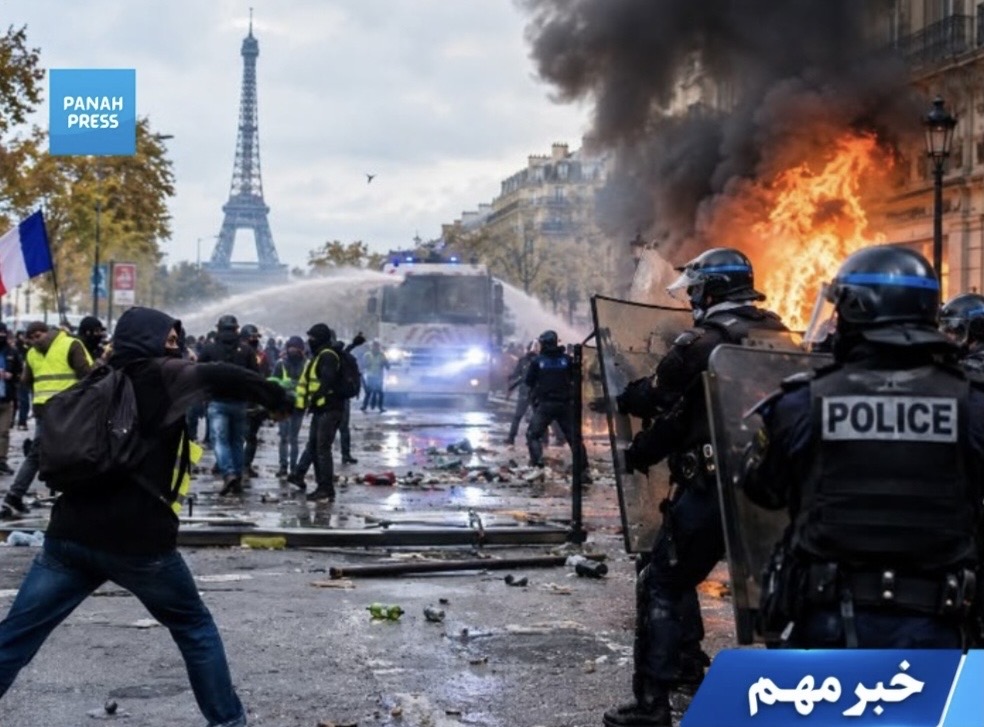
Nationwide protests in France over rising living costs, social inequality, and problems with public services turned violent in several cities on Saturday, October 17. Public buildings were set on fire, shops were looted, and clashes broke out between some protesters and police. French Prime Minister Sébastien Lecornu announced on Saturday evening that around 1,200 people had been arrested and more than 150 police officers had been injured.
According to figures from France’s Interior Ministry, around 550,000 people took part in 110 marches across the country, while the General Confederation of Labour (CGT) estimated the number of participants at around 800,000. Most marches were peaceful, but groups of masked individuals clashed with police in some areas. In Paris, police used tear gas and water cannons to disperse these groups.
In the city of Limoges, a major fire damaged the historic town hall building, causing parts of its roof to collapse. Local officials described the incident as a significant loss to the city’s historical heritage. In Lyon, a tourism office was set on fire, while in Marseille, protesters forced their way through the entrance of the town hall and briefly entered the building. Reports of arson, vandalism, and looting at shops also emerged from several cities.
French President Emmanuel Macron responded to the incidents in a post on the social media platform X, stating that there was no place for violence in the French Republic. He stressed that those who attacked government offices and businesses and looted town halls would face legal proceedings and punishment. Macron also expressed support for the police, saying that people would remain united against those who, in his words, sought to create disorder and undermine the country’s institutions. He emphasised that violence should not prevent protesters from expressing their demands peacefully.
Lecornu also condemned the violence and claimed that far-left groups had played a role in organising some of the violent incidents, while opportunistic individuals had taken advantage of the situation to loot and cause destruction. These statements reflect the French government’s position, and responsibility for each incident must be established through relevant evidence and investigations.
The protests have grown amid dissatisfaction over rising fuel, energy, and food prices, the state of public services, and poor educational conditions. Shortages of teachers and inadequate facilities in some schools have also been among the reasons for student protests. The protest movement began in September in schools on the outskirts of Paris and subsequently expanded as trade unions and other groups joined. Some protesters wore yellow vests, recalling France’s 2018 protest movement, which emerged in response to living costs and social inequality.
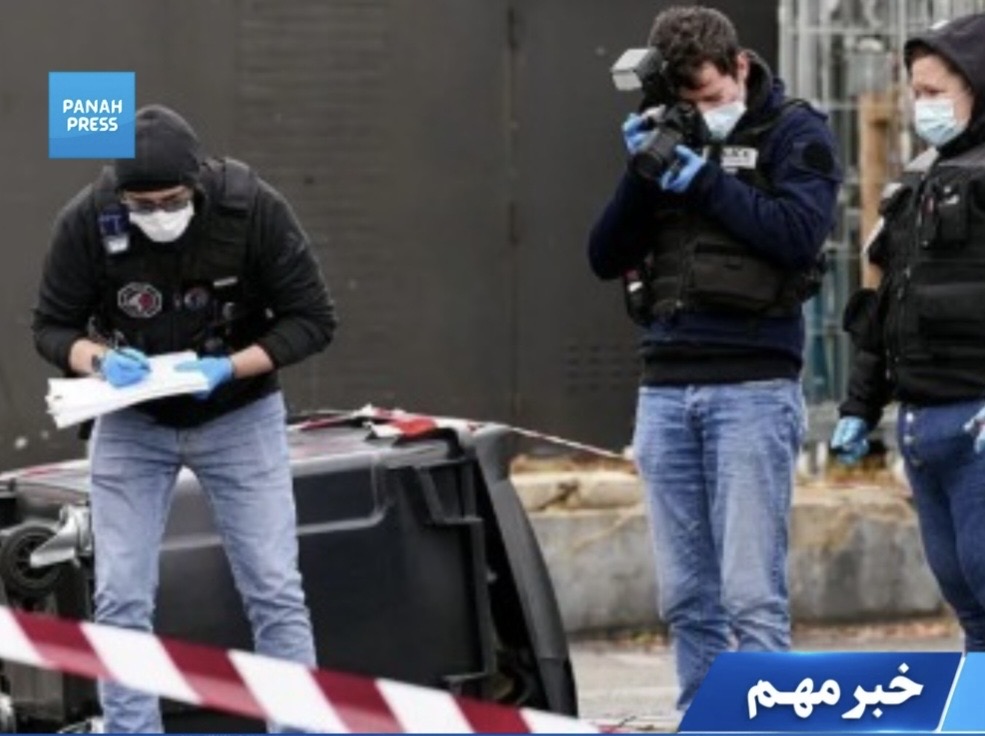
Alongside the violence, police conduct has also come under scrutiny. In the city of Saint-Étienne, a young person lost a hand. Reports suggest the incident may have occurred while the individual was picking up a stun grenade, but the exact circumstances have not been independently established. The body responsible for overseeing police conduct is also examining complaints concerning the possible use of excessive force by officers.
In Belgium, hundreds of protesters, mostly young people, also clashed with police in Brussels on Saturday. Demonstrations were also reported in Portugal and Italy. However, the causes and scale of the protests differed in each country, and these events should not be treated as a single unified movement.
#France #Protests #CostOfLiving #EmmanuelMacron #SocialInequality #PanahPress