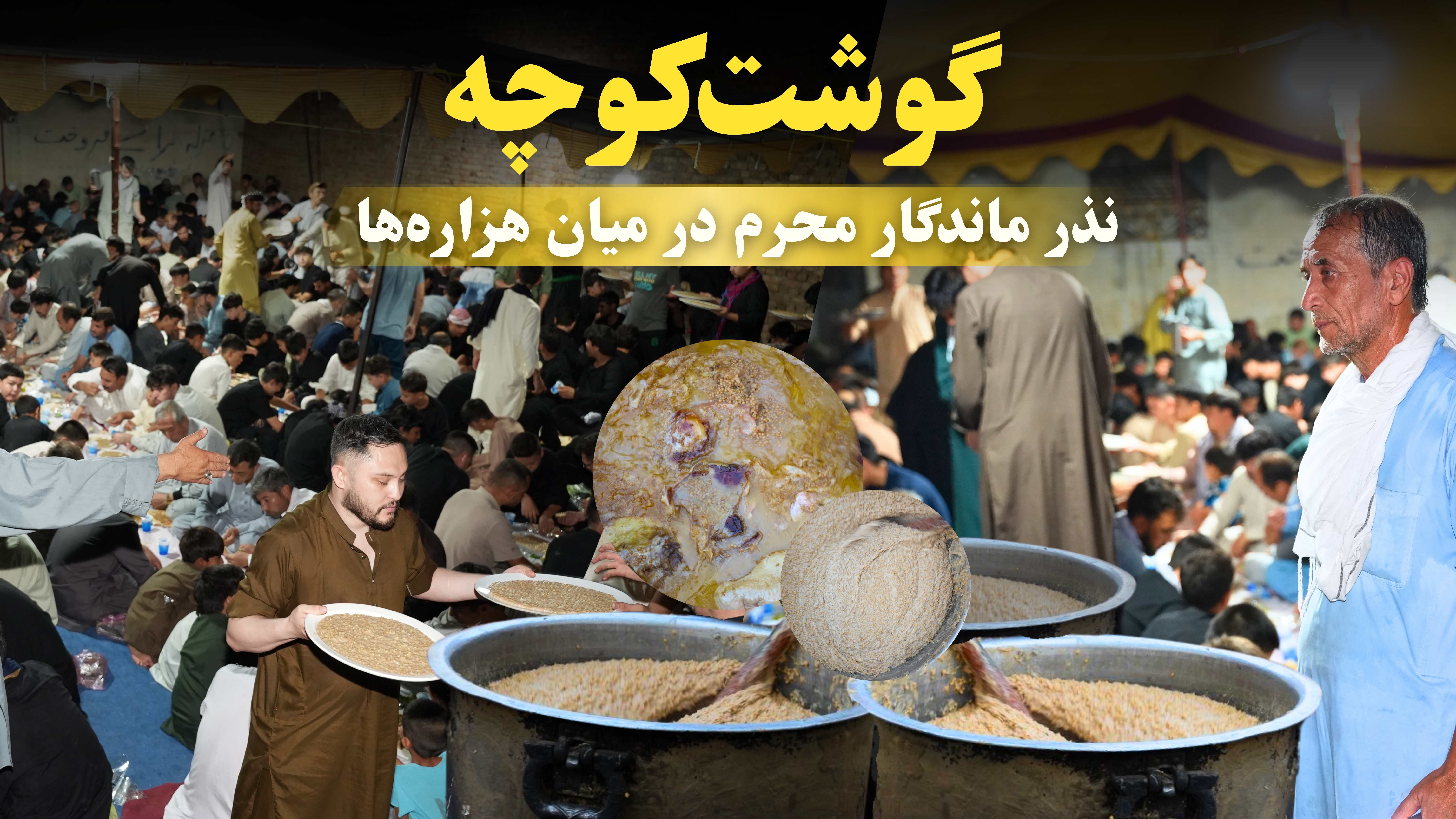
As the holy month of Muharram begins, Afghan migrants in Attock, Pakistan, commemorate the martyrdom of Imam Hussein (AS) and his loyal companions by holding mourning ceremonies, reciting the Holy Quran, delivering elegies, and distributing charitable food (Nazri).
Among the traditions observed during this month, the preparation of the traditional dish Gosht Kocha holds a special place. This Nazri meal, especially popular among the Hazara community of Afghanistan, has long been regarded as one of the symbols of Muharram. Every year, families and volunteers prepare it in large pots and distribute it among mourners, guests, neighbors, and those in need.
Gosht Kocha is made from wheat, beef or lamb, onions, salt, and local spices. Its preparation takes many hours, with community members working together to clean the wheat, prepare the meat, stir the large cooking pots, and distribute the finished meal.
Although there is no definitive historical record of the dish’s exact origin, local traditions and cultural studies suggest that Gosht Kocha is one of the long-standing culinary traditions of central Afghanistan. For generations, particularly among the Hazara people, it has been prepared as a Nazri meal during Muharram.
Despite years of migration and displacement, this tradition continues to thrive among Afghan migrants, including those living in Attock, Pakistan. It remains a symbol of solidarity, sacrifice, cooperation, generosity, and devotion to the Ahl al-Bayt (AS).
Source: Field reporting based on local observations and cultural accounts. The historical background is based on local traditions and cultural research.
Videos
Gosht Kocha: A Long-Standing Tradition of Afghan Migrants During Muharram in Attock, Pakistan

 Watch video