On a day when the skies over Baghlan were calm, a voice was heard in the heart of Dahana-e-Ghori district—not from a mosque and not from an expression of affection, but the recitation of the Shahada, which is spoken daily by Ismailis, this time recited over one of them under pressure to change his religious affiliation.
The Taliban recognize only their own interpretation of Hanafi Islam and do not recognize the Ismaili faith or other religious schools.
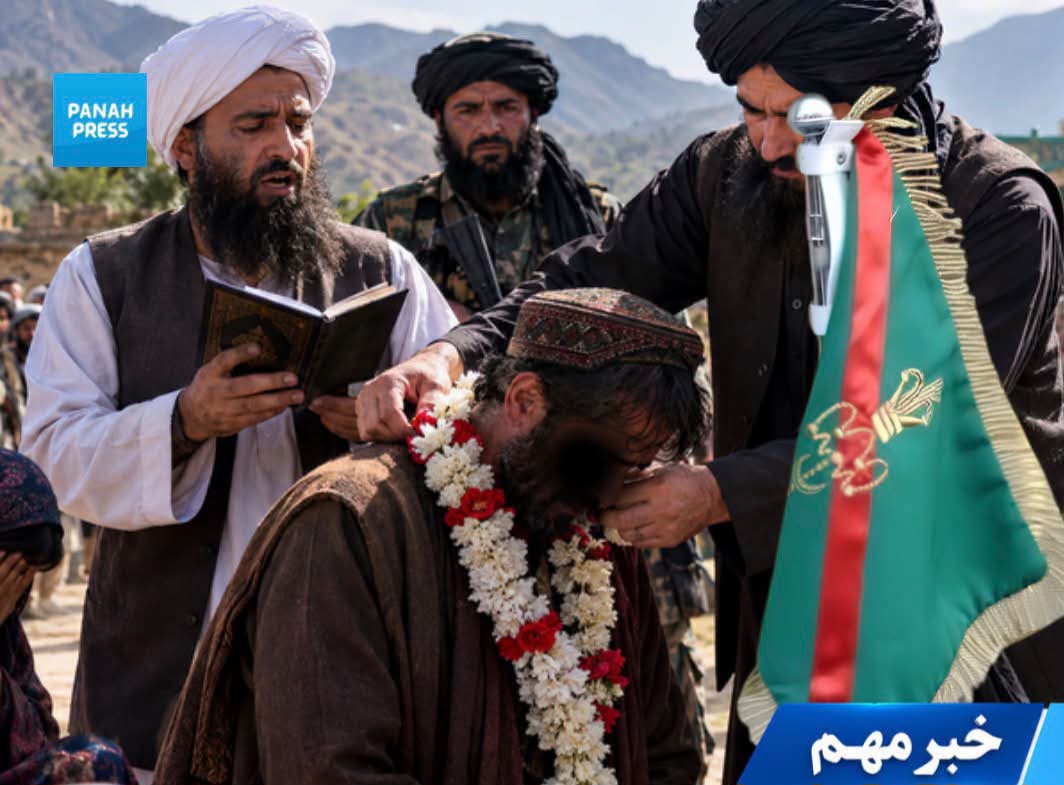
Mullah Musa, the Taliban’s head of the Ministry for the Propagation of Virtue and Prevention of Vice, in the presence of Noor Mohammad Mansour, the group’s district governor, recited the “Shahada” over a man from Shalkatu village on Monday, September 28. The man had lived for generations in this land as a Muslim Ismaili. After the painful moment, a flower was placed around his neck—a flower that was neither a symbol of joy nor celebration, but a sign of forced submission.
This scene is not an isolated incident. Previously, in the same district, the marriage of a Sunni girl to an Ismaili boy was annulled. An Ismaili girl and woman were also pressured into reciting the Shahada and marrying Taliban members. This painful pattern had previously been repeated in Badakhshan, where dozens of Ismaili men—who are themselves Muslims—were reportedly forced under threats and beatings to accept the Taliban’s interpretation of Islam.
Ismailis are Muslims. Their faith is a branch of Shia Islam, and they have lived alongside other Muslims in this land for centuries. However, the Taliban recognize only their own interpretation of Hanafi Islam and do not recognize the Ismaili faith. By forcing Muslims to recite the Shahada, they pressure them to abandon their religious identity and join Sunni Islam, specifically the Hanafi interpretation accepted by the Taliban.
How can a declaration that symbolizes monotheism be turned into a tool for denying the religious identity of a Muslim? How can a declaration that a person already recites every day be imposed on someone who considers himself a Muslim, as though his faith were incomplete?
In Dahana-e-Ghori, Afghanistan, faith today is no longer merely a belief; it has become a test for survival. And the flower around the man’s neck is not a crown of honor, but a sign of a wound inflicted on the heart of a Muslim community.
Afghanistan’s Ismaili community has lived under the shadow of such pressure for years. Jamatkhanas are being closed, children are being sent to compulsory schools, and their religious identity is being threatened in silence. This time, however, the scene unfolded before the people of Dahana-e-Ghori—a scene that targeted not only an individual but also the dignity of an Islamic religious community.
How long should a declaration recited to draw closer to God be used to drive Muslims apart?
Written by: Abu Bakr Ehsan
#Afghanistan #Baghlan #DahanaeGhori #Ismailis #Taliban #ReligiousRights #FreedomOfReligion