

Panah Press | Thursday, 29 October 2026
A surgeon in the US state of Florida used remote robotic surgery technology to remove the prostate of a man with cancer in a procedure in which the surgeon and patient were located in two separate hospitals approximately 56 kilometers apart. The procedure has been reported as the first remote robotic surgery conducted between two hospitals within the United States.
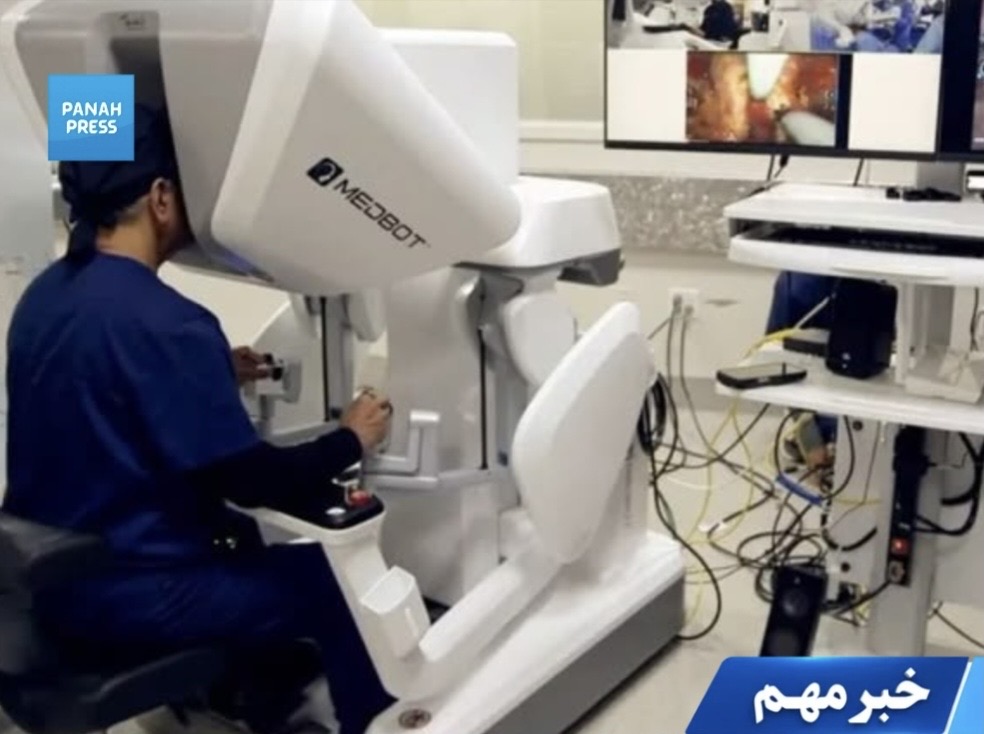
The surgery took place on Sunday, 25 October 2026. Dr. Vipul Patel, medical director of the Global Robotics Institute at AdventHealth, controlled the surgical robot from the medical center’s hospital in Celebration, near the city of Orlando. The patient, a 66-year-old man identified by the pseudonym “Mark,” underwent the operation at AdventHealth’s hospital in Minneola.
Using an investigational robotic system, Dr. Patel remotely guided the movements of the surgical instruments. His commands were transmitted through a high-speed communications network to the robot, whose surgical instruments performed the prostate removal procedure in the operating room under the supervision of the medical team.
Although the lead surgeon was not physically present where the patient was located, a surgical team remained beside the patient in the operating room. Dr. Marcio Moschovas and other team members monitored the patient’s condition so they could intervene if any problems arose. According to published reports, the surgery was successful and the patient was in good condition following the procedure.
The operation was part of a clinical study evaluating the safety and feasibility of remote robotic surgery. Before this stage, the research team had conducted 10 investigational surgeries between Orlando in the United States and Luanda, the capital of Angola. In those trials, the surgeon was in the United States while patients underwent surgery in Angola, more than 11,000 kilometers away. The project has become a notable example of intercontinental robotic surgery.
A New Technology, but Still in the Research Stage
Remote robotic surgery allows doctors to control surgical instruments from a location separate from where the patient is being treated. In the future, this technology could improve access to specialist surgeons for patients living in remote areas or places without specialized medical facilities.
However, the recent operation was conducted as part of a clinical study under an investigational authorization from the US Food and Drug Administration (FDA). Such authorization permits a technology to be evaluated under research conditions, but it does not mean the technology has received general approval for routine medical use.
Researchers still need to assess the method’s safety and effectiveness, the precision of the robot’s performance, the stability of the connection, cybersecurity risks, and how to respond to communication failures or technical malfunctions. Having a surgical team beside the patient is also an important safeguard for addressing potential problems immediately.
Despite the progress made, further research and evaluation are needed to establish the safety and effectiveness of this technology and determine whether it can be used widely in healthcare facilities.
Sources: AdventHealth | ABC News | The Guardian
#PanahPress #UnitedStates #World #RoboticSurgery #ProstateCancer #MedicalTechnology #MedicalInnovation