Early Saturday, September 19, residents of Riyadh were awakened by warning messages on their mobile phones. The first alert arrived before 3 a.m. local time, urging people to remain indoors. About two hours later, a second warning was issued over the possibility of an air attack. Saudi Arabia’s Civil Defense Authority, following the alerts in Riyadh and the city of Al-Kharj, announced that the danger had passed. According to reports, this is the first time since the latest escalation in Houthi attacks that such a warning has been issued in the Saudi capital.
What has been reported:
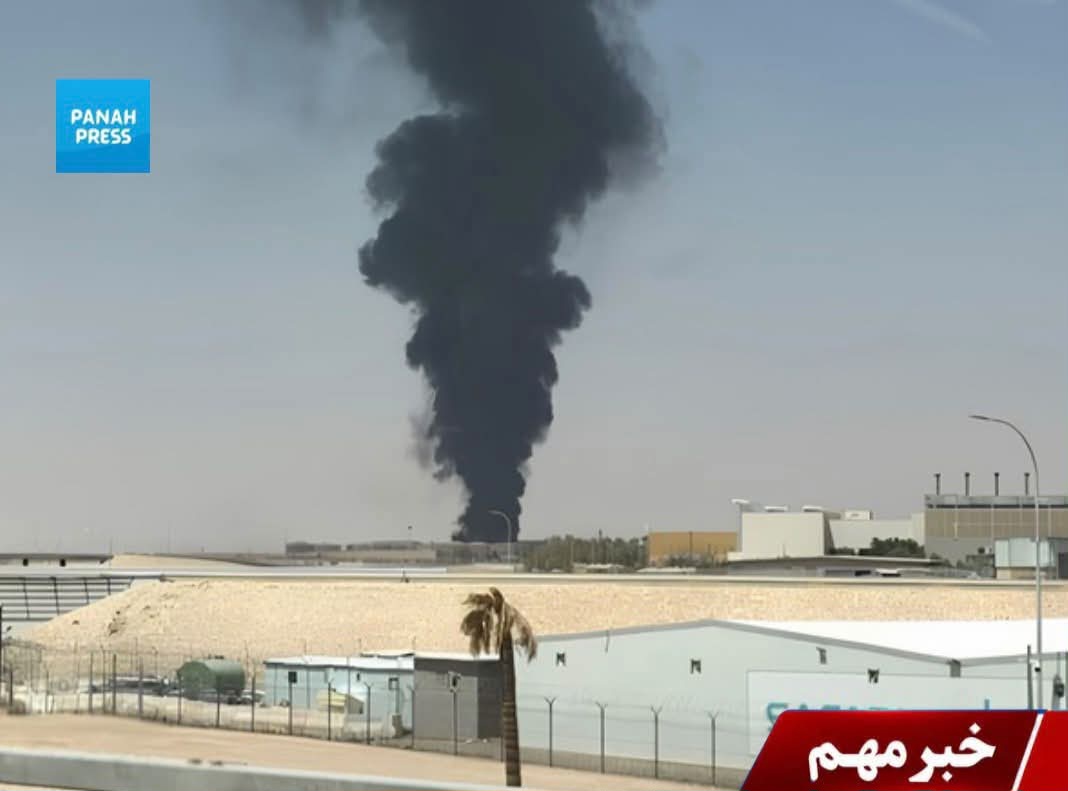
A Reuters correspondent reported hearing two explosions in the Olaya district. Hours later, witnesses saw a large column of black smoke near King Khalid International Airport. According to Agence France-Presse, the smoke came from a fire near a fuel storage tank linked to Saudi Aramco. A number of flights at the airport were also delayed or canceled.
The Houthis said they had targeted sites in Riyadh and several other areas of Saudi Arabia with ballistic and cruise missiles and drones, and also claimed to have targeted Aramco facilities. The Saudi-led coalition said a ballistic missile launched toward Riyadh had been intercepted and destroyed. However, Riyadh has not yet officially said that the fire near the airport was the result of an attack.
Why this event matters:
Even if no direct damage is confirmed, the sound of air raid sirens in the capital sends a clear message: the scope of the conflict has moved beyond border areas and surrounding facilities and has reached the political and economic center of Saudi Arabia. For Riyadh, the cost of this situation is not only military. Public confidence, flight security, and the image of stability in a country dependent on foreign investment are also coming under pressure.
The energy dimension is also concerning. If Aramco facilities are repeatedly targeted or even simply threatened, the impact could extend beyond Saudi Arabia to energy markets and insurance and transportation calculations. The continuation of attacks in the Red Sea and Bab el-Mandeb further reinforces these concerns.
Politically, the United Nations Security Council has condemned attacks on civilian and energy infrastructure, but the gap between condemnation and containing the situation on the ground remains wide. Saudi Arabia, in response, has also increased airstrikes on Houthi positions in Yemen.
Human cost:
According to United Nations information, the latest fighting has displaced more than 112,000 people inside Yemen, while nearly 3,000 others have fled by sea to Djibouti. These figures are a reminder that each new escalation falls first and foremost on civilians.
Sources: Reuters, Associated Press, Agence France-Presse, BBC
#PanahPress #SaudiArabia #Riyadh #Houthis #Yemen #RedSea #BabElMandeb #MiddleEast